.svg)


In modern industrial manufacturing, CMMs and CNC machines play complementary roles. A CMM provides high-precision measurement to verify dimensional accuracy and product quality, while a CNC machine transforms raw materials into complex, high-precision parts. Integrating these systems creates a complete quality control workflow that connects design, machining, inspection, measurement feedback, and corrective actions.
What is CMM?
A Coordinate Measuring Machine (CMM) is a high-precision metrology device widely used in manufacturing quality control. Equipped with contact or non-contact probing technology, a CMM captures accurate coordinate data along the X, Y, and Z axes to measure part dimensions, positions, and geometric tolerances (GD&T).
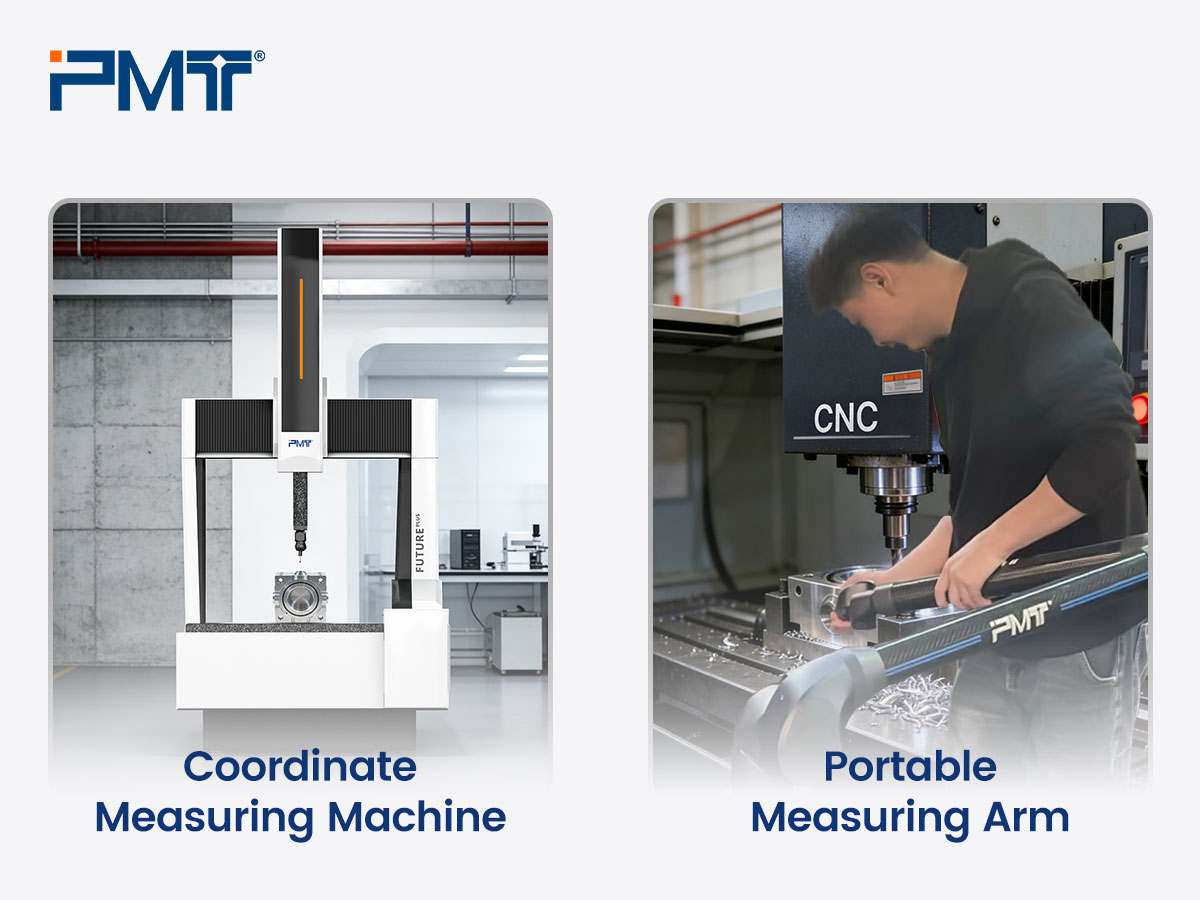
CMMs are generally classified into two types:
Fixed CMMs, such as bridge, gantry, and shop floor models, typically used in controlled environments for maximum accuracy.
Portable CMMs, such as measuring arms and handheld 3D scanners, which can be positioned directly on the shop floor or beside CNC machines for flexible inspection.
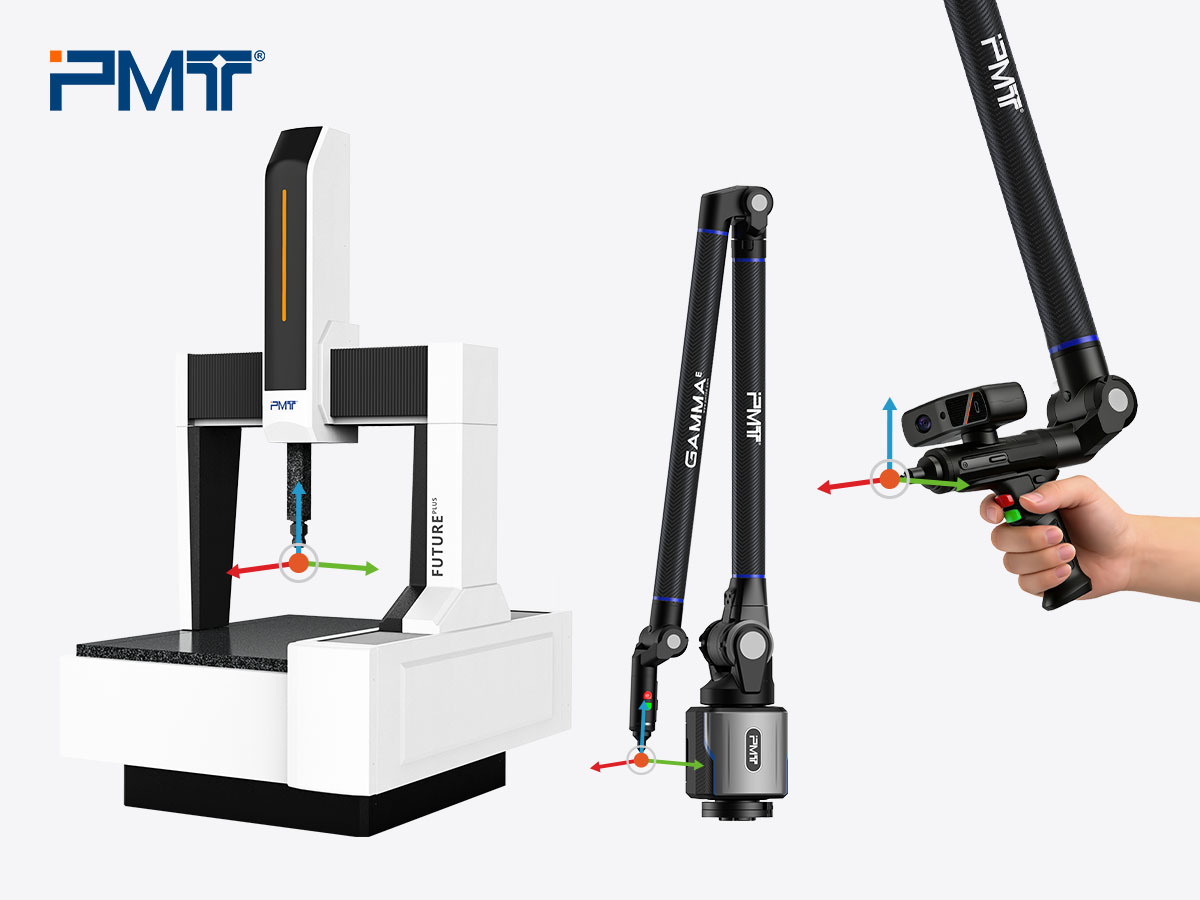
With over 20 years of metrology expertise, PMT is a high-tech enterprise committed to delivering integrated measurement for laboratory, shop floor, and on-site applications, meeting the diverse quality inspection needs of manufacturers. PMT’s fixed CMMs—including the PRIME and FUTURE series—operate in controlled temperature and humidity conditions to ensure stability, while, PMT portable CMMs, such as portable measuring arms, providing convenience and efficiency for immediate, in-process measurement.
What is CNC?
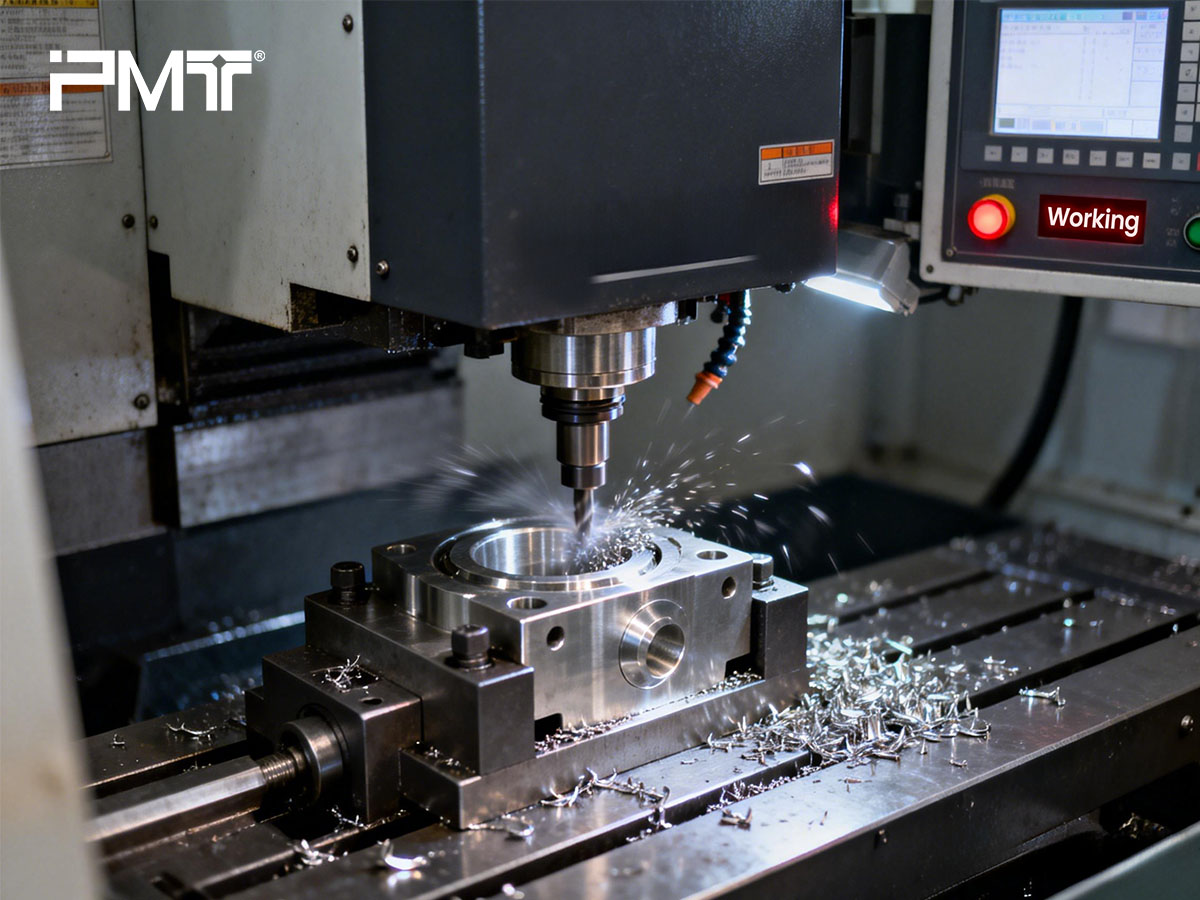
CNC machines convert raw materials into precise, finished components. Performing operations such as milling, turning, drilling, and tapping, these machines—including machining centers, CNC lathes, and compound machine tools—produce complex, high-precision parts according to design specifications.
CMM vs. CNC: What’s the Difference?
| Item | CMM (Coordinate Measuring Machine ) | CNC (Computer Numerical Control) |
| Role | Quality inspection equipment | Manufacturing and machining equipment |
| Process Stage | Quality Control | Production |
| Purpose |
Check part dimensions against design specifications |
Transform raw materials into finished parts |
| Function |
Measure dimensions, positions, and GD&T |
Machine parts such as flats, holes, surfaces and cavities. |
| Operating Method | Contact/scanning probes | Cutting tools |
| Core Software | PMT INSPECT metrology software | CAD/CAM manufacturing software |
| Output | Inspection report (digital data) | Machined part (physical part) |
How CMMs Drive CNC Process Optimization?
CNC machines excel at producing high-precision parts, while CMMs ensure those parts meet strict quality and consistency requirements. Measuring finished parts and feeding accurate inspection data back into CNC processes allows manufacturers to quickly identify deviations, make timely adjustments, reduce scrap, and improve overall production efficiency.
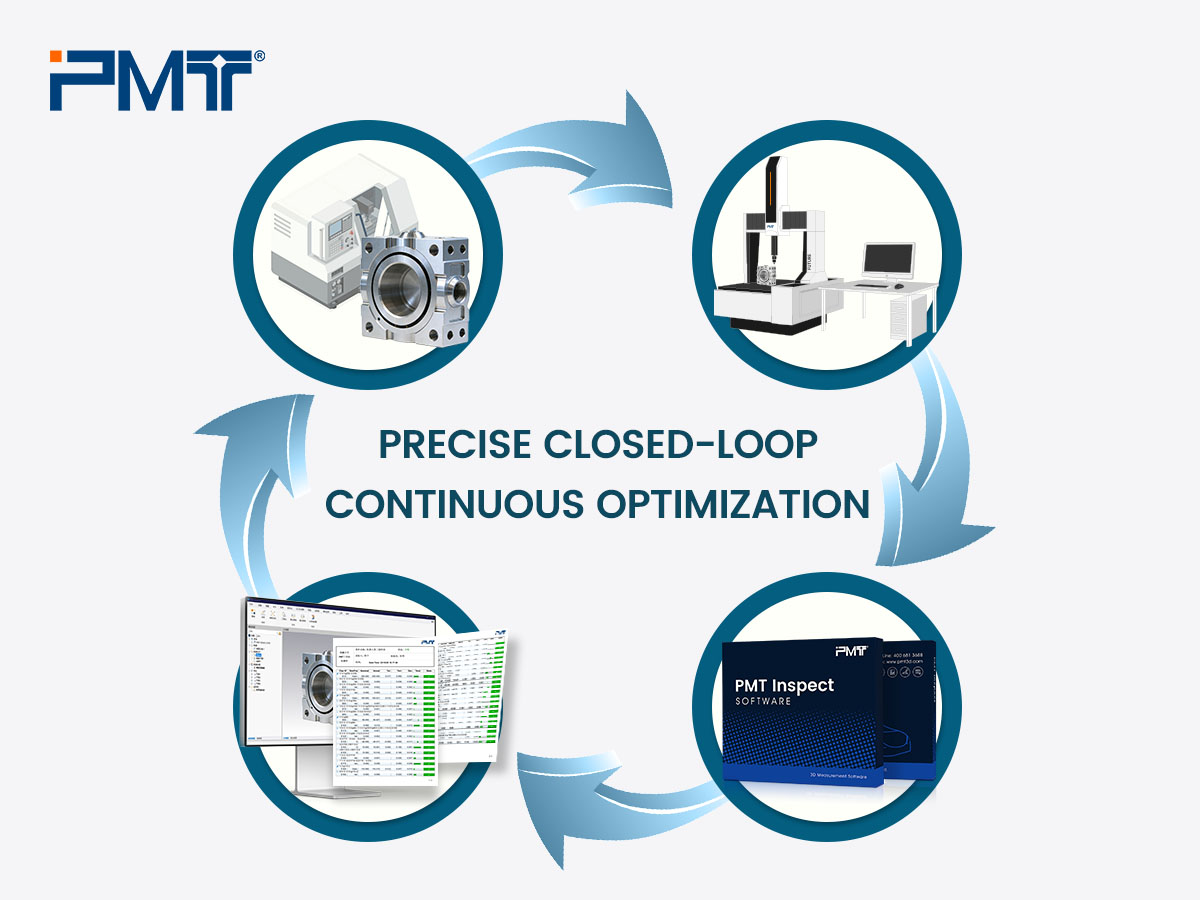
Closed-Loop CNC & CMM Process Optimization
- Hardware-Software Integration & Data Acquisition
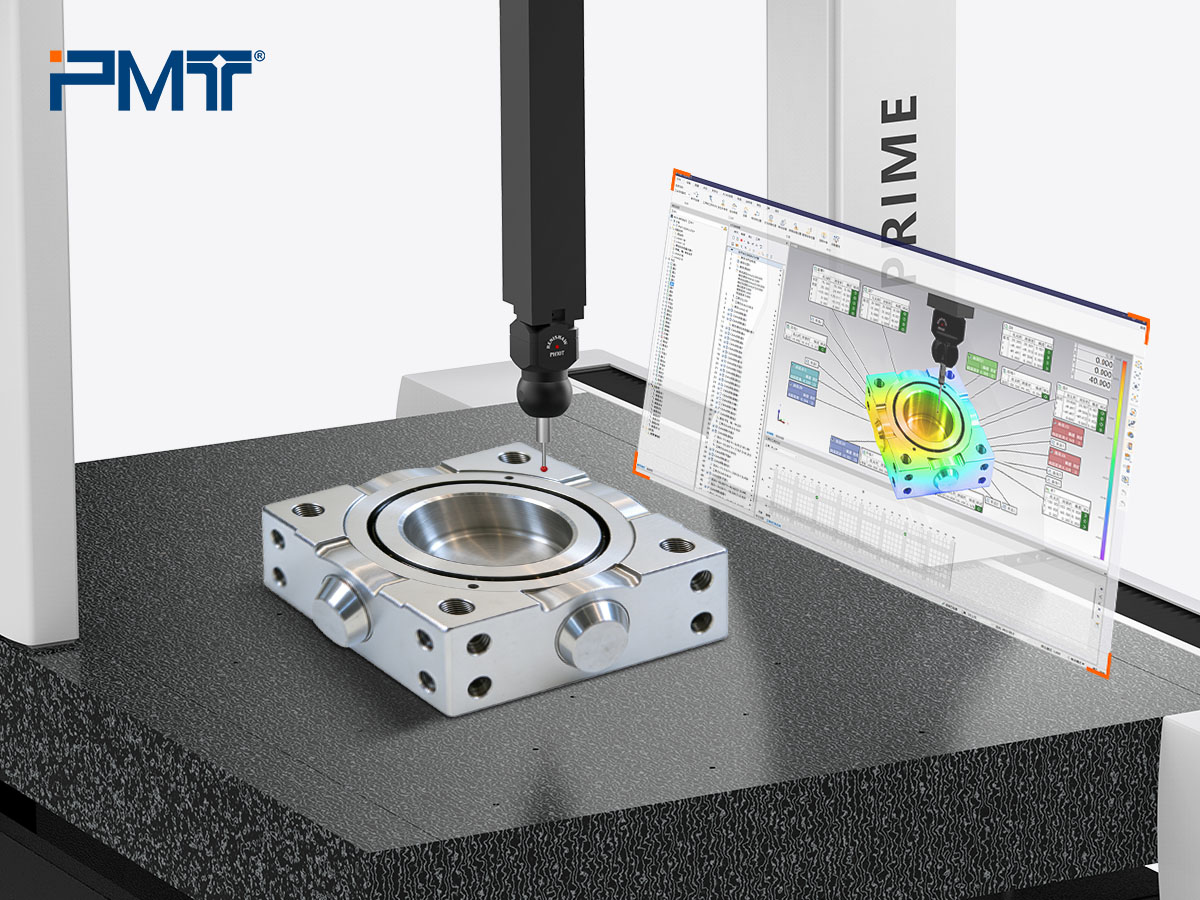
CNC machines precisely transform raw materials into finished parts according to design specifications. These parts are then measured with a PMT CMM using PMT INSPECT 3D metrology software. Acquiring 3D coordinate data via touch probes or reverse scanning, this integration provides a reliable foundation for process optimization.
- Report Generation & Deviation Analysis
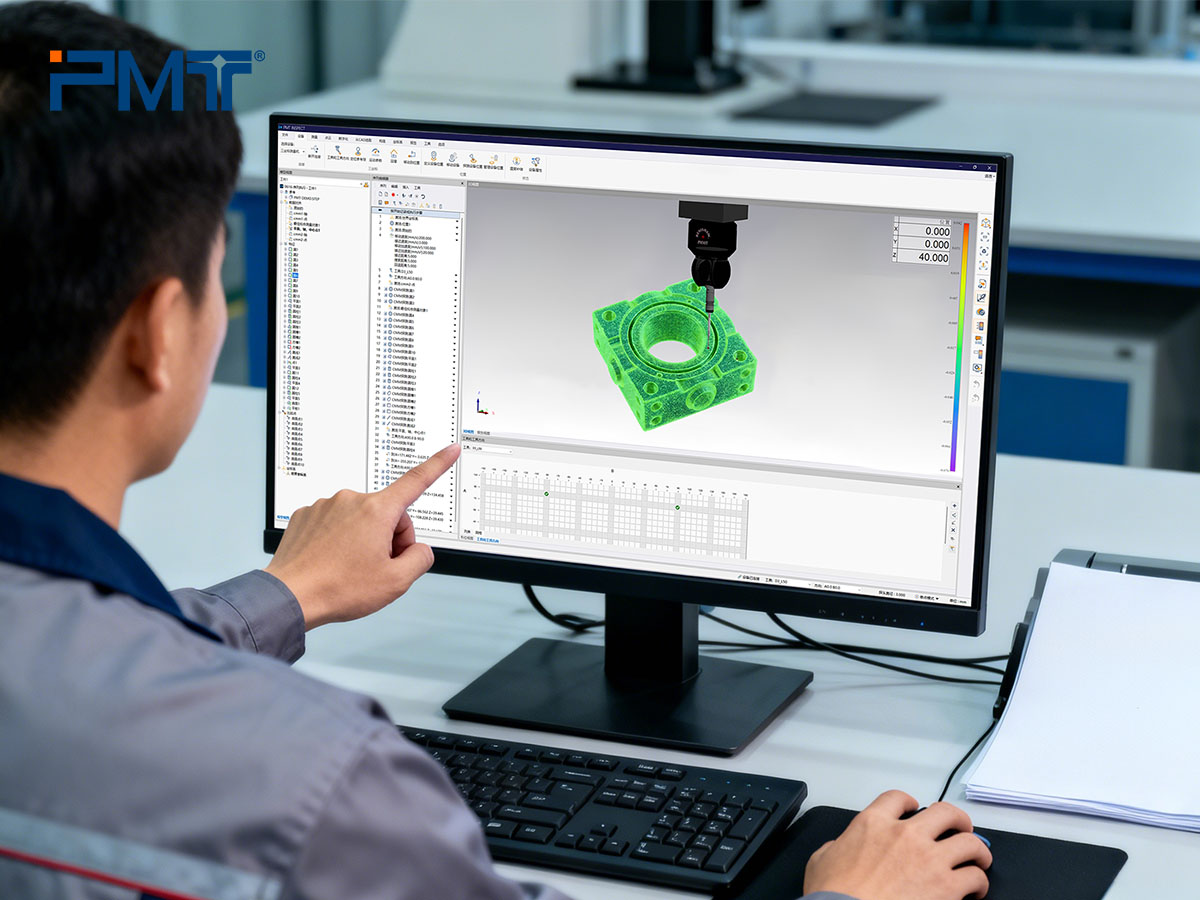
Operators analyze inspection data by constructing geometric features or aligning point clouds with the original CAD model. This process identifies dimensional deviations and potential quality risks—such as fixture misalignment or tool wear—enabling both verification and root-cause analysis.
- CNC Machining Process Optimization
Deviations identified by the PMT CMM are used to refine CNC programs or adjust parameters, such as fixture alignment or tool replacement, enabling precise and efficient machining optimization.
- Continuous Improvement Loop
After adjustments, newly produced parts are inspected again by the CMM. Comparing pre- and post-optimization data verifies the effectiveness of adjustments, completing the loop and establishing a cycle of continuous improvement.
Conclusion
Achieving sustainable manufacturing efficiency requires real-time, data-driven processes, but lasting success also depends on a stable, long-term quality control system. Integrating PMT CMMs with CNC machines extends far beyond basic inspection or production monitoring. By continuously collecting and analyzing measurement data and feeding it back to the CNC system, this synergy enables ongoing process optimization and ensures consistent product quality. The result is not only enhanced operational efficiency but also a compliant, sustainable manufacturing control system—helping enterprises stay ahead in today’s competitive market.